Design
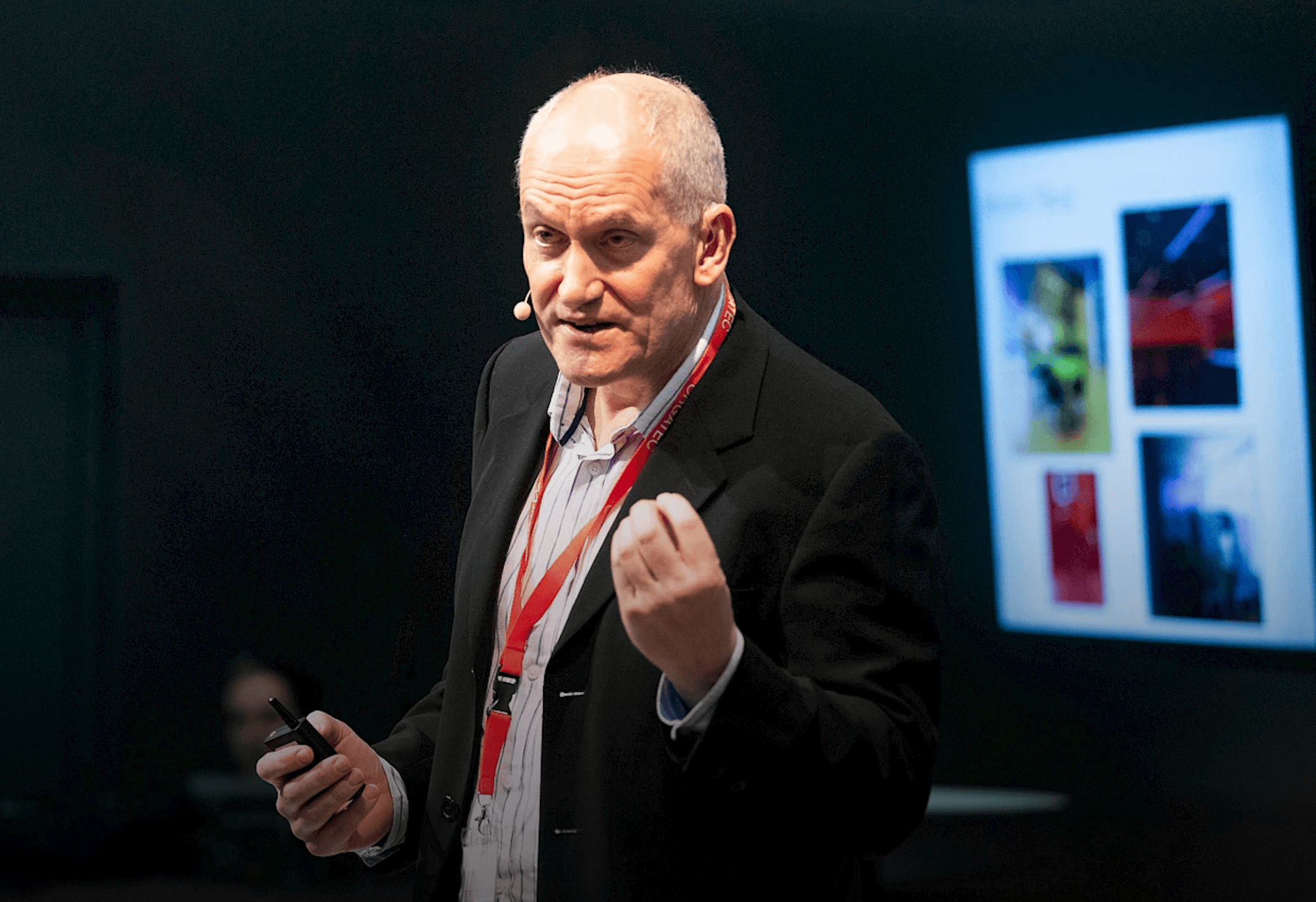
In Conversation: Dr Craig Knight
When it comes to biophilic design, few voices have shaped the conversation as much as Dr. Craig Knight. With decades of research into the psychology of workplaces, his studies have shown, time and again, that the environments we inhabit directly affect how we feel and how we perform.
We sat down with Dr. Knight to discuss his career, his most influential findings, and what the future holds for Biophilia in the workplace and beyond. From the now-famous “15% productivity study” to reflections on hybrid working, replica planting, and cultural differences, this interview is a journey into the science behind why greenery matters, not just as decoration, but as a catalyst for wellbeing and performance.
“Every business wants to know what their investment is worth, and you’ve made that very clear.”
Before the first question, Dr. Knight turns the spotlight back on Plant Plan, praising the company’s ROI calculator and its clarity for businesses measuring return on greenery. It’s a reminder that the conversation around plants is no longer just aesthetic, it’s financial.
Craig Knight: I should start by saying I’m not a professor, I’m a doctor. And I have to say, I was looking at your ROI calculator on the website. I think it’s an excellent tool. Every business wants to know what their investment is worth, and you’ve made that very clear. So, congratulations on that.
Asked if he keeps houseplants himself, Dr. Knight offers a characteristically dry response. He might not be a technical “plant person,” but he values greenery in his office, and, he notes, they make far better companions than plastic.
Tom Nugent: Are you a plant person yourself? What houseplants do you keep around you?
Craig Knight: I wouldn’t call myself a plant person in the technical sense. I can identify one species of tree – “a tree”! But I do enjoy having plants around me. In my office I’ve got a fern and some succulents. They’re tactile, they’re nice to have close by. And they’re alive, which makes them far better companions than bits of plastic.
Craig explains how his research began at Exeter University, where lean working models were at their peak. He recalls barren environments being championed as efficient, and how his early experiments (with little more than some budget plants from B&Q) showed just how wrong that thinking was…
“No animal thrives in a stark, empty environment. So why would humans be the exception?”
Tom Nugent: Could you tell us about your academic background, and what first drew you into biophilic research?
Craig Knight: At Exeter University, I started looking at the way businesses were organising their workplaces. Around that time, “lean” working and Six Sigma were fashionable. The idea was that you strip out everything unnecessary – no plants, no pictures, no clutter. The logic was simple: fewer distractions, fewer errors. The reality was disastrous.
No animal thrives in a stark, empty environment. Put any species in a barren setting and you see stress, aggression, and reduced lifespans. So why would humans be the exception?
We decided to test it. A few colleagues and I went to B&Q, bought a bunch of cheap plants and pictures, and ran some experiments. The pattern was consistent: when you enrich a space, people feel better, and they perform better. And plants, in particular, were brilliant. They were relatively cheap, robust, easy to move, and psychologically engaging.
Carlsson Elkins: So the results were obvious from the start?
Craig Knight: Yes, absolutely. It became clear very quickly that plants weren’t just decoration. They were part of what made people more human in their workplace.
The “15% Productivity” Study
One of Dr. Knight’s best-known studies demonstrated how a modest investment in planting translated into millions of pounds in additional revenue. The findings shook confidence in lean office design, though not all companies were ready to accept the results.
Carlsson Elkins: One of your most famous studies is The Relative Benefits of Green Versus Lean Office Space. Could you tell us a bit more about it?
Craig Knight: Sure. In one project we introduced about £10,000 worth of planting into a consultancy’s office that had been designed according to very strict lean standards. We measured what happened – not just in terms of cost, but productivity. Productivity went up by about 15%.
Now, if you roughly translate that, it meant between £1 and £5 million in extra revenue, all from £10,000 worth of plants. And you think, why wouldn’t you do that?
Carlsson Elkins: Exactly. When I first tried our ROI calculator I thought, “this looks too good to be true.” Why aren’t companies queuing up to do this?
Craig Knight: There are two big reasons. First, people are wedded to their processes. If you’ve invested heavily in lean systems, you don’t want to admit that something as simple as plants can outperform them. Second, sometimes leaders just make really poor decisions. In that consultancy, they buried the results. Why? Because they were charging £25,000 a day for Six Sigma implementation. Our evidence showed their model was deeply flawed. So they hid it rather than lose face or money.

How workplace productivity is measured
Dr. Knight explains the science behind quantifying productivity. Rather than relying on vague measures, his team broke jobs down into essential tasks, from detail accuracy to information use, providing data that was both valid and actionable.
Tom Nugent: How do you actually measure a 15% increase in productivity?
Craig Knight: That’s a great question. Most companies measure it very badly. It’s a bit like asking someone to run a marathon without a stopwatch. You get an answer, but it’s meaningless. What we do is break a job down into its essential tasks and measure those directly.
For auditors, we looked at attention to detail, accuracy of processing, speed of working, and how effectively they used management information. For other jobs – HR, directors, marketing – the components are different, but the principle is the same. If you break the job down carefully, you can measure productivity in a valid, scientific way.
Carlsson Elkins: So there’s a way to quantify something that often feels very vague.
Craig Knight: Exactly. And once you measure it properly, you see the difference that enrichment – and plants in particular – can make.
Beyond plants: art, light and sensory design
Although planting is central, enrichment doesn’t stop there. Art, lighting, even fragrance can change how people feel and perform. Craig shares a story of a Belgian hospital where lavender scent improved not only patient wellbeing but perceptions of value.
“Plants are brilliant, but they’re not the only tool for making spaces human.”
Craig Knight: I should say, plants aren’t the only way to enrich a space. They’re brilliant, but art, lighting, even smell can work. For instance, there was a Belgian hospital where adding a lavender fragrance improved patients’ perceptions of care, and even their sense that the hospital shop was better value.
Tom Nugent: That’s fascinating. And of course, plants are unique in that they’re living, they grow and change.
Craig Knight: Exactly. That’s one of their strengths. And another thing is ownership. If people feel that the plants are “theirs,” the effect is even stronger. Engagement goes up, wellbeing goes up, and productivity follows.
Global and cultural perspectives on workplace design
While the benefits of biophilia are consistent across age, gender, and hierarchy, Dr. Knight suggests more research is needed in collectivist cultures, where personal agency plays a different role. It’s an open question with global implications.
Craig Knight: We’ve studied across ages, genders, and workplace hierarchies, and the benefits are consistent. Where we need more work is across cultures. In the West, we value personal agency. In collectivist cultures, the dynamic may be very different. It would be fascinating to see whether the same empowerment effects hold in those settings.
Looking ahead: the future of biophilic workplaces
The pandemic disrupted long-held assumptions about how and where we work. Dr. Knight sees hybrid working as a chance to reshape productivity, arguing that happiness and performance are not in conflict but deeply connected.
“We’ve never found a point where people are ‘too happy’ to be productive.”
Tom Nugent: Where do you see biophilic design research heading in the next decade?
Craig Knight: Hopefully not round in circles, which is what’s happened for the last couple of hundred years! COVID gave us a chance to rethink work. Suddenly hybrid working wasn’t just for senior managers, it became a level playing field. If people can work where they feel most engaged, productivity rises. And we’ve never found a point where people are “too happy” to be productive. The happier people are, the better the outcomes.
Carlsson Elkins: That really challenges some old assumptions about management and productivity.
Craig Knight: It does. We’ve been taught for generations that work has to be hard and grim to be valuable. The evidence suggests the opposite.
Replica plants and perception in design
Replica plants, Craig notes, can work, but only under certain conditions. If people believe they’re real, the benefits remain. The question for the future is whether high-quality replicas might also create psychological value, especially in darker environments.
Carlsson Elkins: What about replica plants? Do they have the same effect?
Craig Knight: We’ve tested this. Replica plants work if people believe they’re real. The moment they realise they’re fake, the benefit vanishes. But what we don’t know yet is whether very high-quality replicas – where people know they’re artificial, but they still look convincing – might still produce some of the benefits. That would be a fascinating study. And in dark spaces, combining good replicas with smart lighting might be the most practical option.
Tom Nugent: That’s really interesting, especially for offices where light is limited.
Craig Knight: Exactly. It’s about finding realistic solutions that still provide enrichment.
Commercial Applications in Hospitality and Retail
The conversation widens beyond offices. In cafés, hotels, and retail, planting has the potential to increase dwell time, encourage spending, and transform customer experiences. For Dr. Knight, the opportunity is clear and waiting to be measured.
“Plants can encourage people to stay longer, spend more, and enjoy themselves more.”
Craig Knight: I’d love to see more work on plants in commercial settings beyond offices. Hotels, cafés, retail. Plants can encourage people to stay longer, spend more, and enjoy themselves more. And it wouldn’t be hard to test – just compare footfall and revenue before and after planting. I think the results would be very clear.
Closing thoughts on plants, wellbeing and productivity
Dr. Knight ends with a simple reminder: planting is one of the easiest, most cost-effective ways to improve both wellbeing and performance. For businesses willing to listen, the message is clear.
Tom Nugent: Craig, thank you so much. This has been fascinating.
Craig Knight: My pleasure. Plants give you extraordinary bang for your buck. They’re one of the simplest, most effective ways to improve wellbeing and productivity. Keep doing what you’re doing, and let’s keep the conversation going.